Here at SCTS we are committed to ensuring your staff have fully integrated knowledge, skills and aptitudes, so we are constantly evaluating how we train. We are brave enough to identify and improve upon methods that have become outdated or ineffectual.
We recognise that ‘Knowledge Based Training’ alone is no longer a sufficient means of up-skilling the social care workforce.
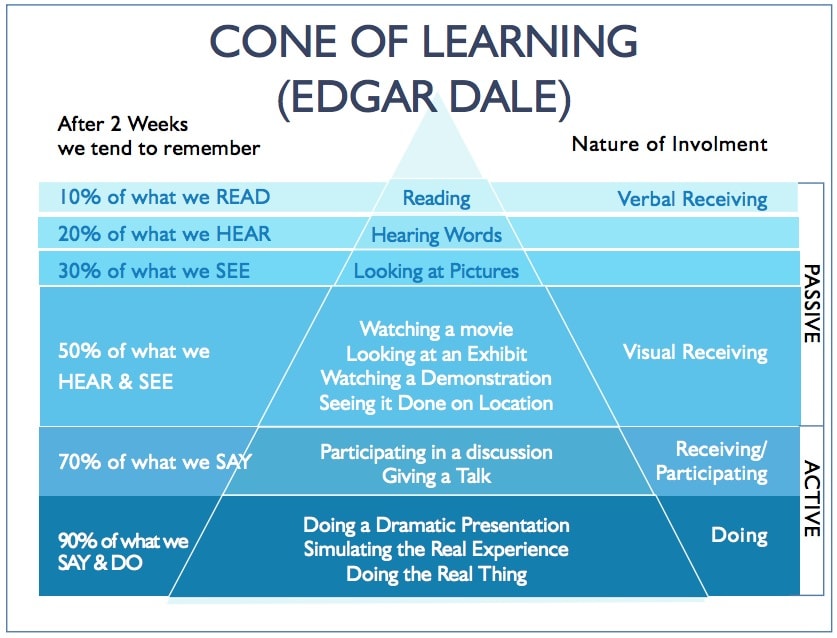
Dale’s Cone of Experience shows the different kinds of learning we can employ. The methods at the bottom offer a more concrete experience and bring about long-lasting understanding, whilst the ones at the peak of the cone are more abstract and short lived.
Foster care training is usually done through group face-to-face training or independent e-learning. Each method focuses on the transference of theoretical knowledge. This knowledge is essential for our staff, but the risk is that these training sessions only cover the ‘Passive Learning’ section.
We are not suggesting that ‘doing’ is the only method that educators should use. The ‘Verbal Receiving’ methods at the top give staff the higher order thinking skills that are essential for the more complicated ways of thinking required to deal with complex caring situations. ‘Visual Receiving’ level methods are also valuable (with a 50% knowledge retention rate), so we use lots of videos in both our face-to-face and e-learning sessions. However, we are committed to creating innovative ways for learners to underpin their knowledge within the ‘Participation and Doing’ areas because research like Edgar Dale’s shows that this is the only way to convert theory into proficient working styles.
When SCTS design a training plan we believe in creating a multi-sensory experience, where all senses are involved in the learning process. We see that most conventional training has this ‘Cone of Learning’ the wrong way round, with little time being given to the experiential learning that really embeds learning.
This poses some challenges:
…the answer is, that within traditional formats, we simply can’t…
We have, however, identified a solution…
Blended Learning offers a way for commissioners to truly maximise on the value of their training investment because it links up the knowledge collected through e-learning with the experiential learning that happens in the training room.
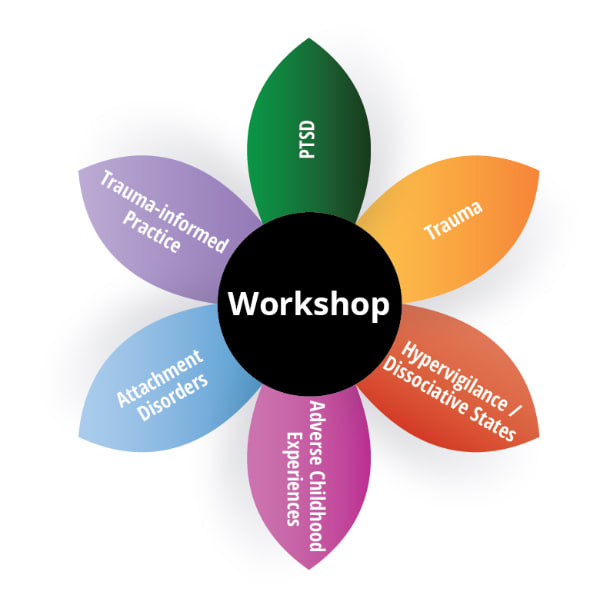
25 years of knowledge and experience has gone into creating our Blended Learning package. You can see it in more detail here
For a free trial of your E-learning please email us for more information: admin@socialcaretrainingsolutions.com