[vc_row][vc_column][vc_column_text css=”.vc_custom_1554407716002{margin-bottom: 0px !important;}”]
Last week we explored the first stage of trauma recovery, which is Safety and Stabilisation. With this in place, the second stage of Adaptation can begin.
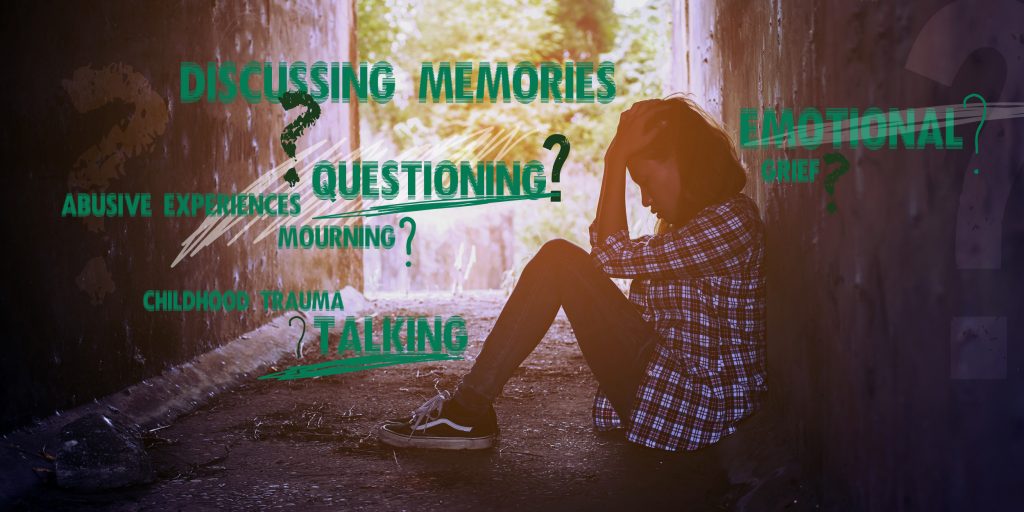
Stage two is often referred to as ‘remembrance and mourning’ because painful memories can often resurface. This provides a great opportunity for these memories to be reviewed and discussed.
[/vc_column_text][/vc_column][/vc_row][vc_row][vc_column][vc_empty_space][/vc_column][/vc_row][vc_row][vc_column width=”2/3″][vc_column_text css=”.vc_custom_1554407678274{margin-bottom: 0px !important;}”]It is likely though that a person will experience grief for the losses s/he has suffered due to a traumatic childhood. For example, many who experienced severe childhood trauma feel that their childhood was stolen from them, which can lead to them not wanting to engage in any deep work that will further impinge on what’s left of their youth.
Our key goal here is to support the young person to accept their past, as this brings great strength and power. This strength and power comes from having faced one’s life head-on, having experienced the worst of the past, and having arrived at a way of being that is free from either running away from painful truths or getting caught up in them. We are supporting the young person to find the resilience to ‘move on’ as a person of greater courage, strength, hope and wisdom.[/vc_column_text][/vc_column][vc_column width=”1/3″][mk_custom_list title=”Relevant Info & Courses” icon_color=”#ff9900″]
[/mk_custom_list][/vc_column][/vc_row][vc_row][vc_column][vc_empty_space][/vc_column][/vc_row][vc_row][vc_column][vc_column_text css=”.vc_custom_1561981470422{margin-bottom: 0px !important;}”]You can read about Stage 1 HERE
You can read about Stage 3 HERE
We have created a suite of training for organisations that are developing an agency-wide Trauma-Informed Practice (TIP). TIP offers frameworks that are grounded in an understanding of trauma, whilst seeking to promote healing and the building of resilience.
Our suite of training is therefore mapped against Judith Herman’s 3-stage model of Trauma Recovery:
Stage 1: Safety and Stabilisation
Stage 3: Reconnection and Adaptation
All of this is covered in our Therapeutic Fostering training program, full details of which can be found HERE, or contact Tori on admin@socialcaretrainingsolutions.com to discuss how it can work for your teams.[/vc_column_text][/vc_column][/vc_row]
Generic training can leave staff feeling unprepared for the real-life scenarios they face. Our tailored approach ensures the content, delivery method, and case studies are directly relevant to your sector (e.g., education, healthcare, sport, charity, corporate), your local policies, and the specific vulnerabilities and risks present in your community.
We design engaging, practical, and compliant training across three core areas:
Invest in training that transforms knowledge into action. Equip your team with the confidence and competence to protect those in your care proactively.